

Chances are that you are here because you’ve been at home with a toddler for months on end. With winter coming and the prospect of more time indoors maybe you’ve scrolled Instagram only to see some perfect mama set up engaging activities for her children who never seem to make a mess or argue. I feel you! However, if perfect is your goal, you’ve come to the wrong place! I deal in fun, easy, and real. My goal is to equip not overwhelm. If we were sitting across the table from each other, I’d look into your eyes and tell you “You’ve got this!” Because you do. Everything I’m going to share with you is easy and adaptable, promise!

First off, you might want to look at my post about building a sensory bin. It gives a good overview of the elements of a bin and how to make one on a budget.
Secondly, sensory play does not need to be limited to a bin or fancy sensory table. Some of the best times I’ve had with children have been at the kitchen sink! This post gives an overview of the how’s of sensory play.
Alright, now let’s get down to it! Sensory play should be four things: Fun, Engaging, Independent with the option to be Cooperative, and Imaginative. Study after study have shown that children learn better when they engage multiple senses at once. Hence why I believe sensory play in the early years is so critical. Children learn with their entire bodies!
Let’s break down the four categories I just mentioned.
FUN
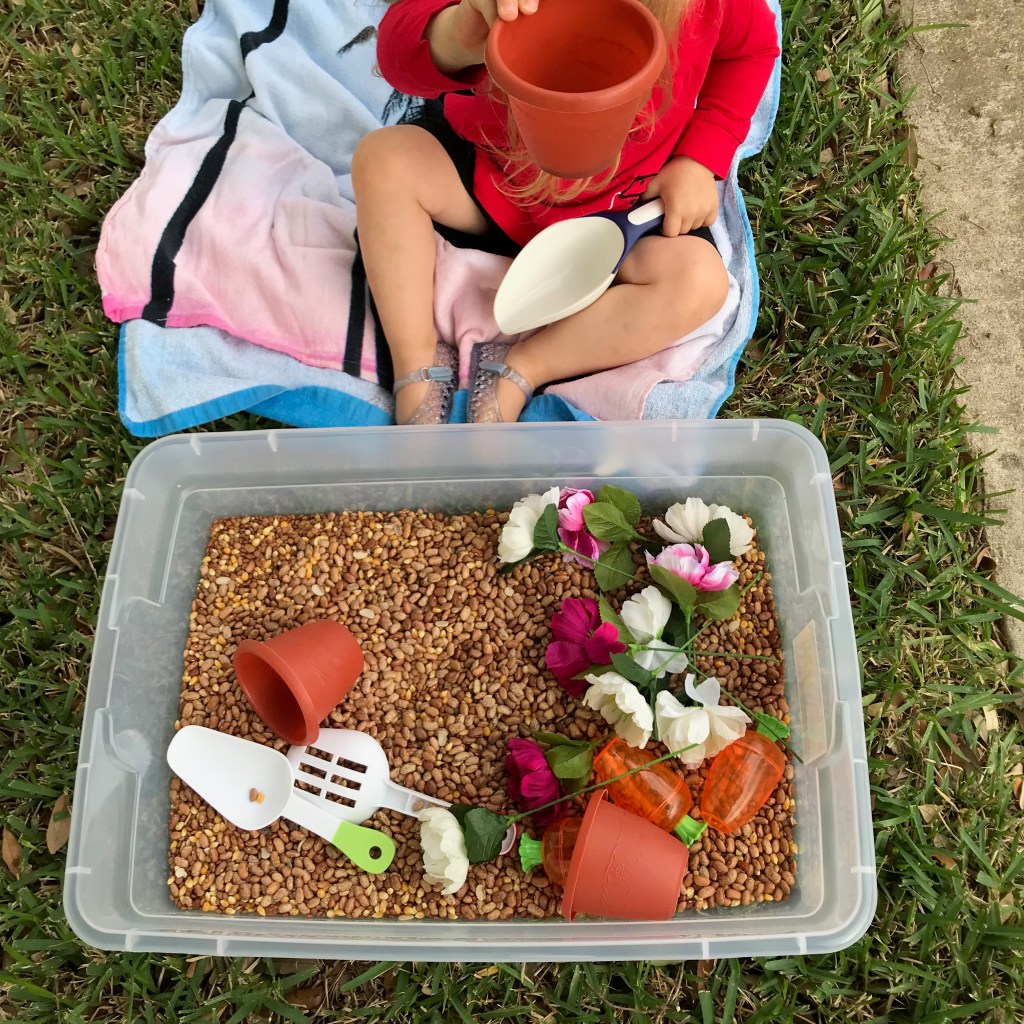
Sensory play is instinctively fun! It’s messy, loud, visually exciting, and all around playful. Kids love being allowed to make a mess while role playing. One of my favorite ways to do this is setting up sensory bins with a specific role playing theme. In the spring we might have a flower planting bin.
In the summer we set up an ice cream shop with frosting playdough! (A fun recipe I’ll share someday!)
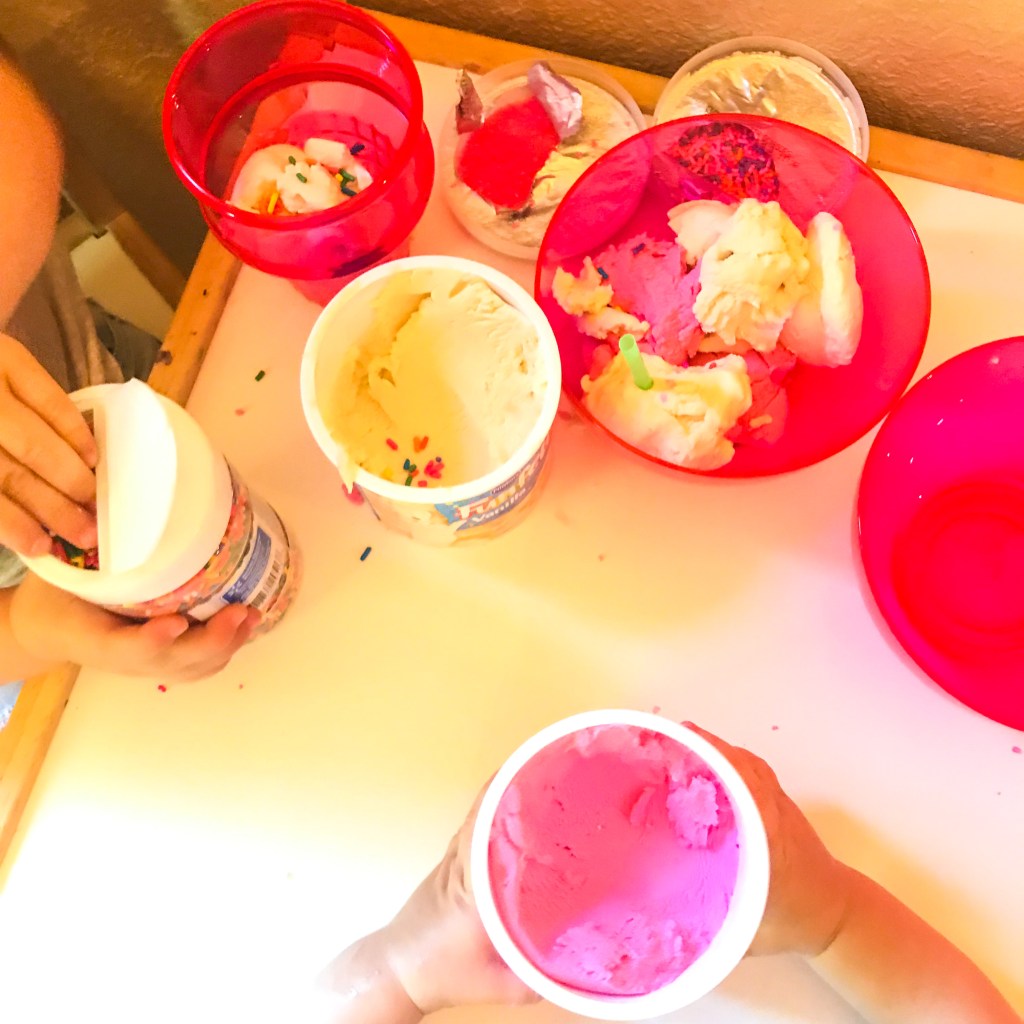
Through these role playing activities, children are connecting their play world with the real world. By practicing language they’ve heard mom use at the store or using their practical life skills children are building their concrete thinking skills.
ENGAGING
Teaching young children their shapes, colors, and counting is not going to happen through flash cards! Like I said before, children learn best when all their senses are used. My most used object for counting and color are pom poms! Throw some in a box, give your child an ice cube tray, and help her count while she fills the holes. Hearing the repetition of numbers and color names will allow your child to make the connection quicker.
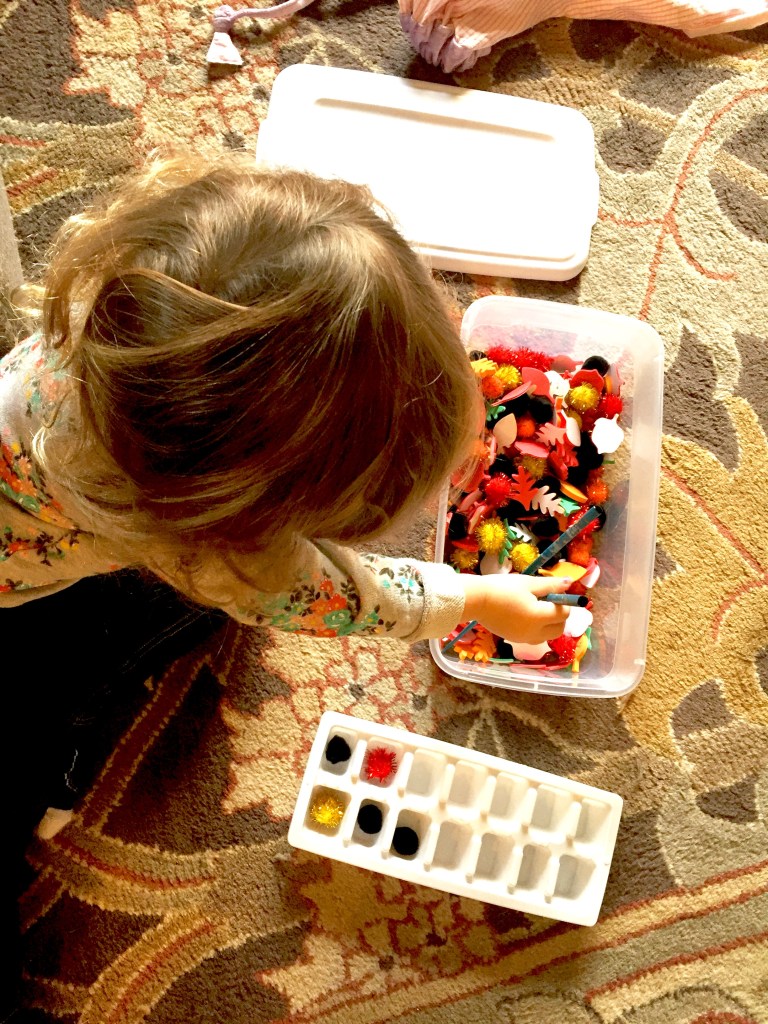
Your child can also work on sorting skills through a sensory bin.
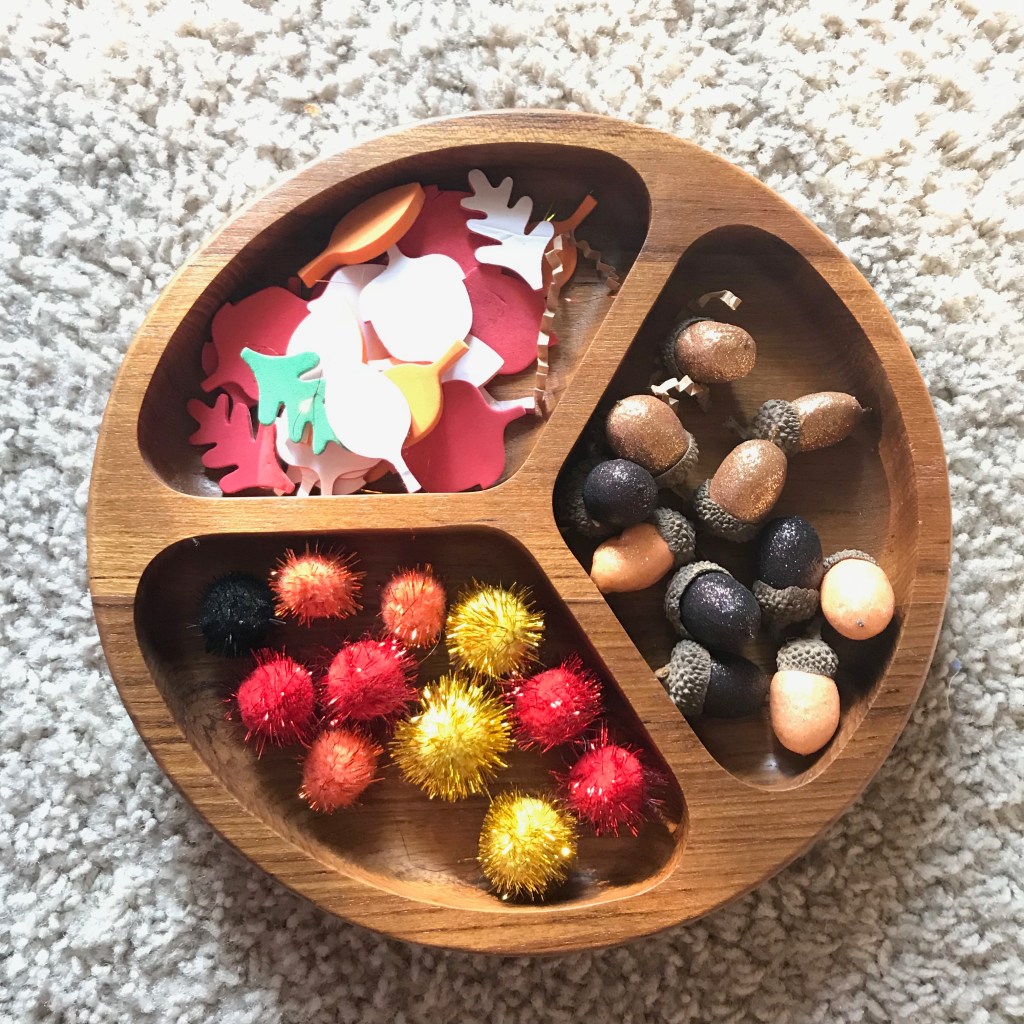
I love a seek and find sensory bin! Simply hide small objects in a bin for your child to find and match. You could also hide chunky puzzle pieces in a rice bin.
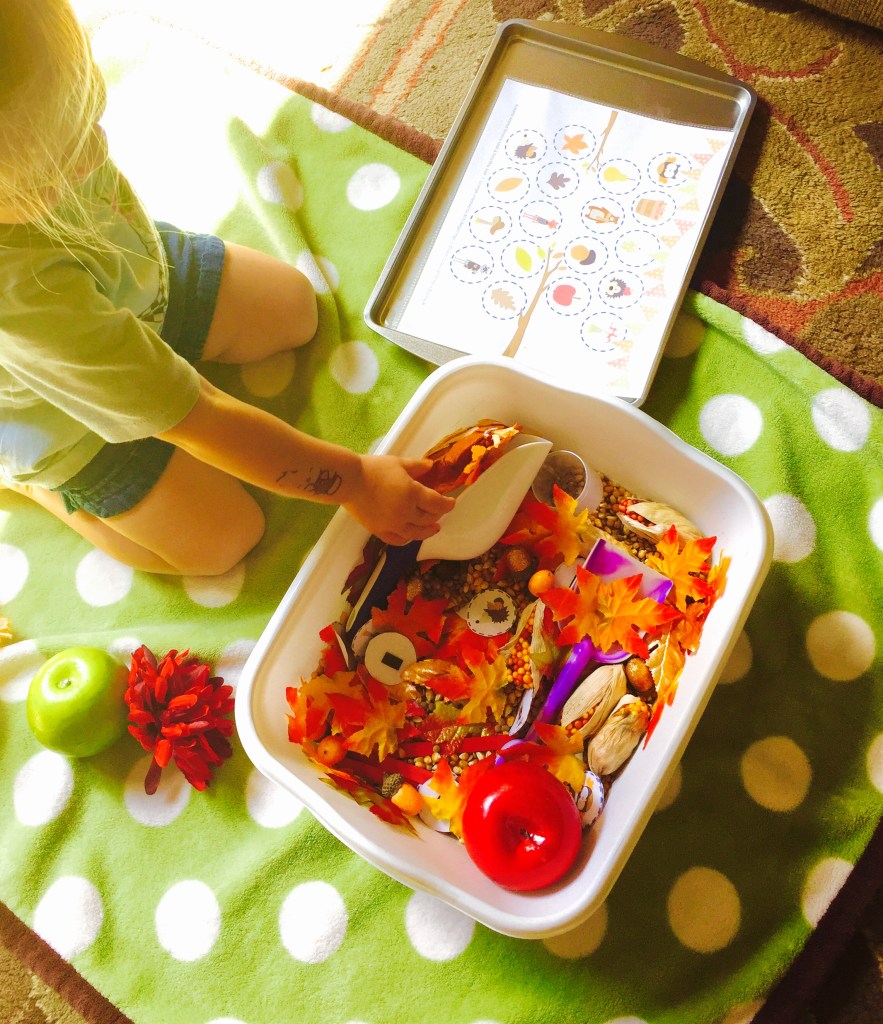
So much is happening here: color matching, fine motor skills, and counting!
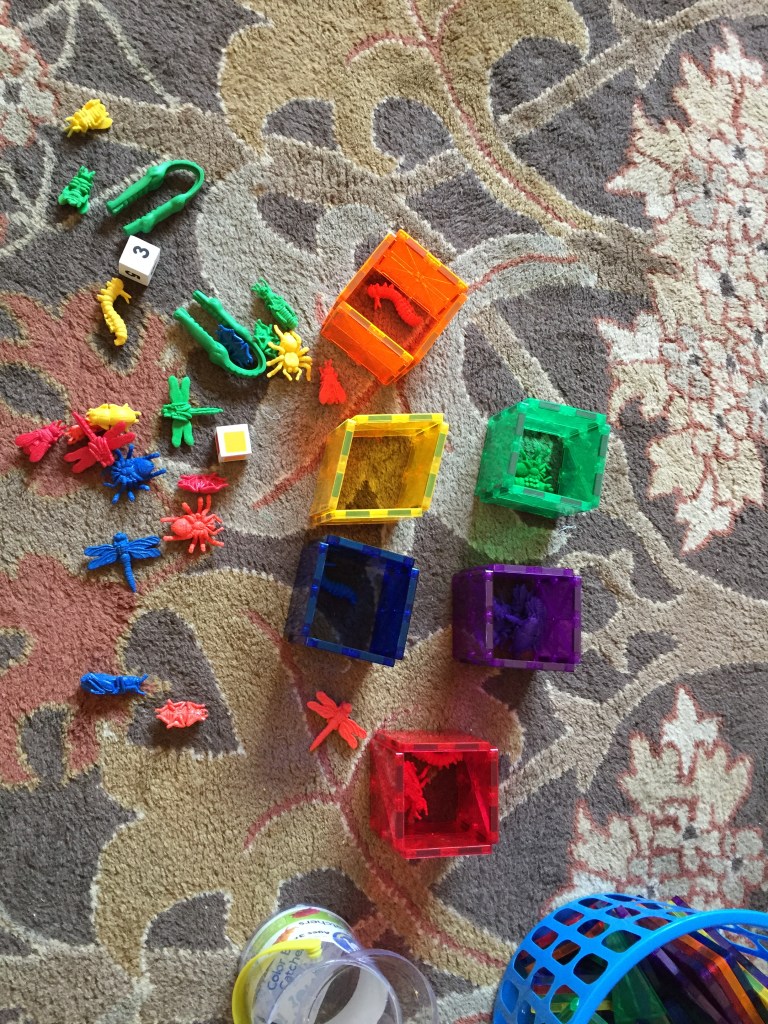
INDEPENDENT WITH THE OPTION TO BE COOPERATIVE
Let me break this one down a little. A sensory bin should be independent, meaning you don’t need to hover around giving directions, but it offers opportunities to be cooperative. When I notice one of my charges needs a little more help with play, I might model a behavior I’d like to see her use and walk away or engage with the child in a meaningful experience.
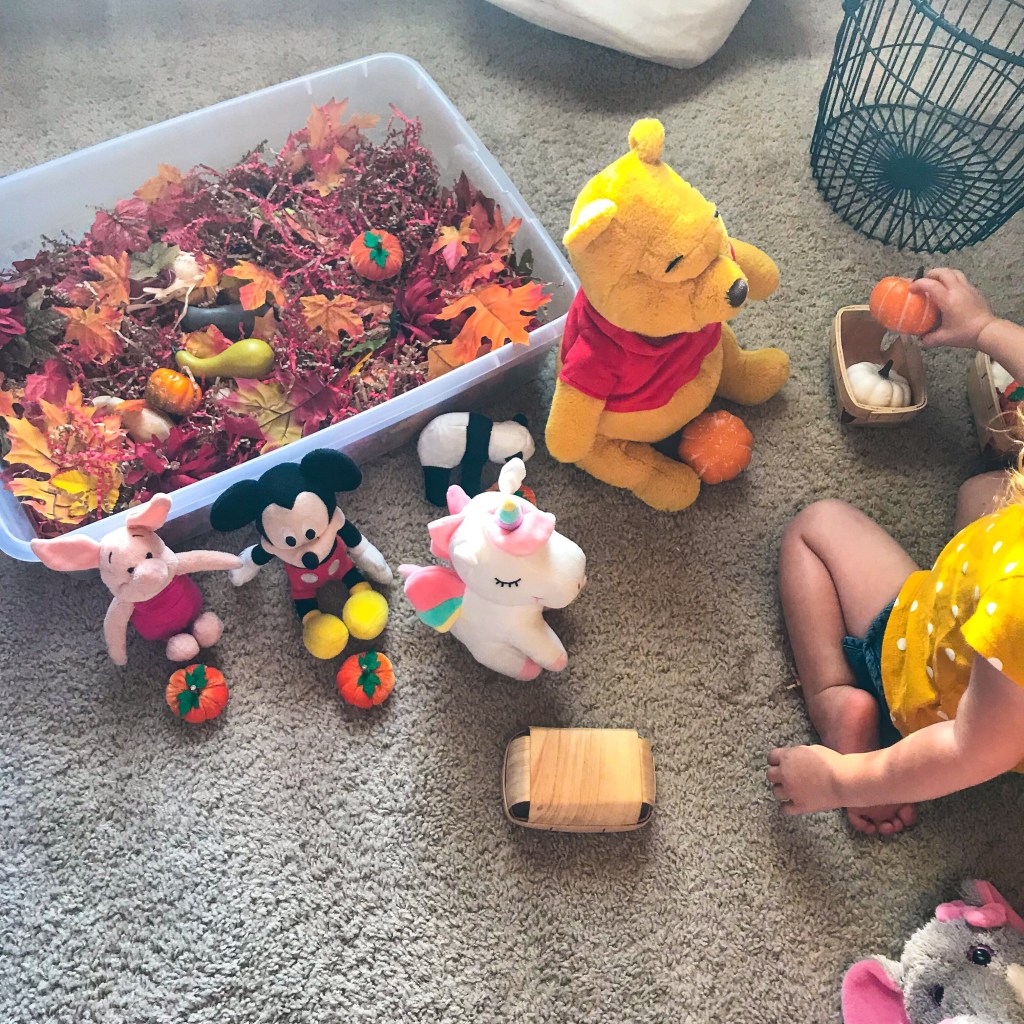
In this picture, I noticed that my charge, E, was having some trouble with her one to one correspondence skills. She would count to ten but consistently forget the number 2! I set out some friends to invite to a pumpkin party. Together we counted the friends and then counted while handing out pumpkins. After a few tries, E was able to independently complete the skill.
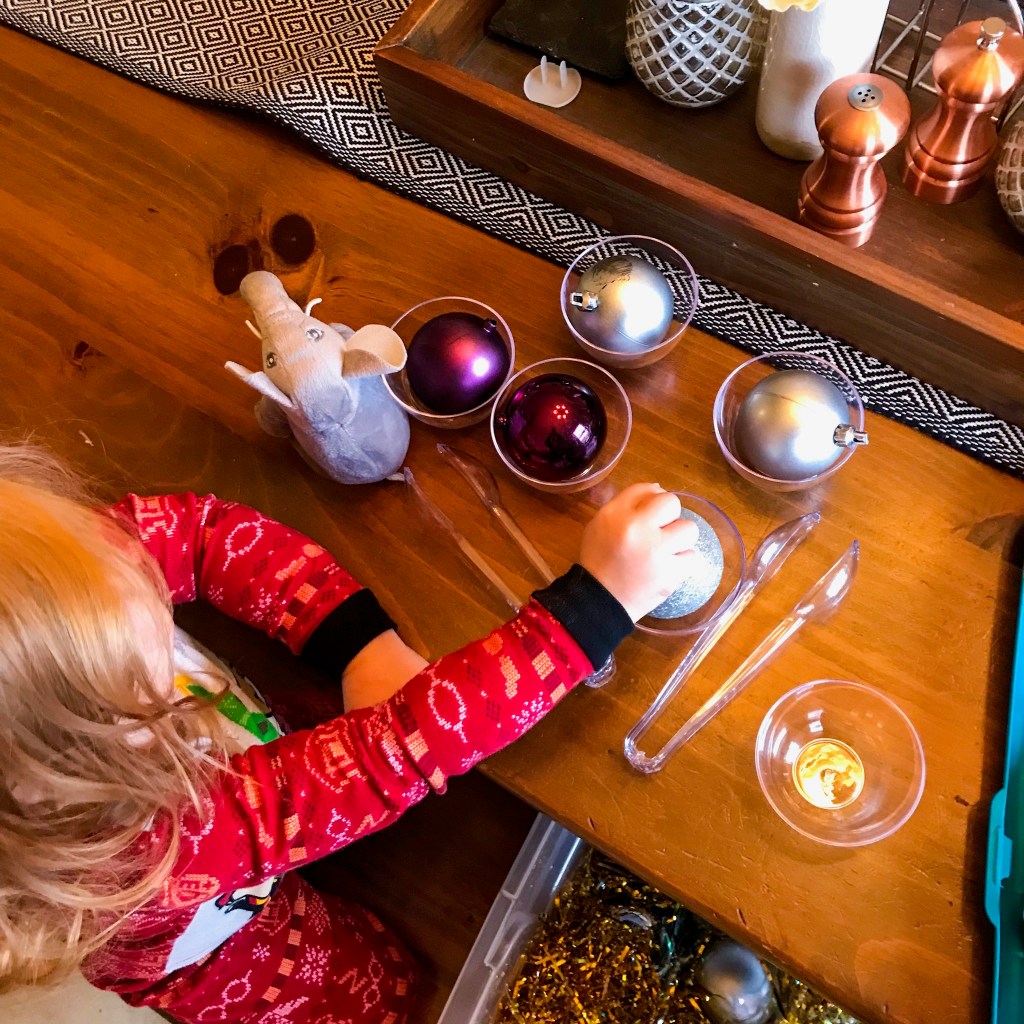
Another way to include one to one correspondence in a Christmas bin is by adding small bowls. This also is great for fine motor skills!
A cooperative sensory bin can also simply be two children engaging in parallel play. This means the children are playing next to each other but not with each other. They may share tools or ideas but they don’t engage with each other outside of that.
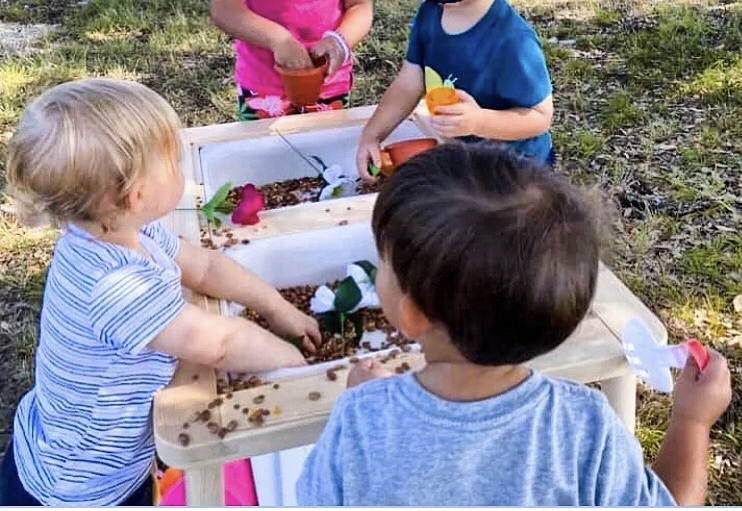
This is a perfect picture of parallel play! The children are all using the same items but each one is interacting differently.
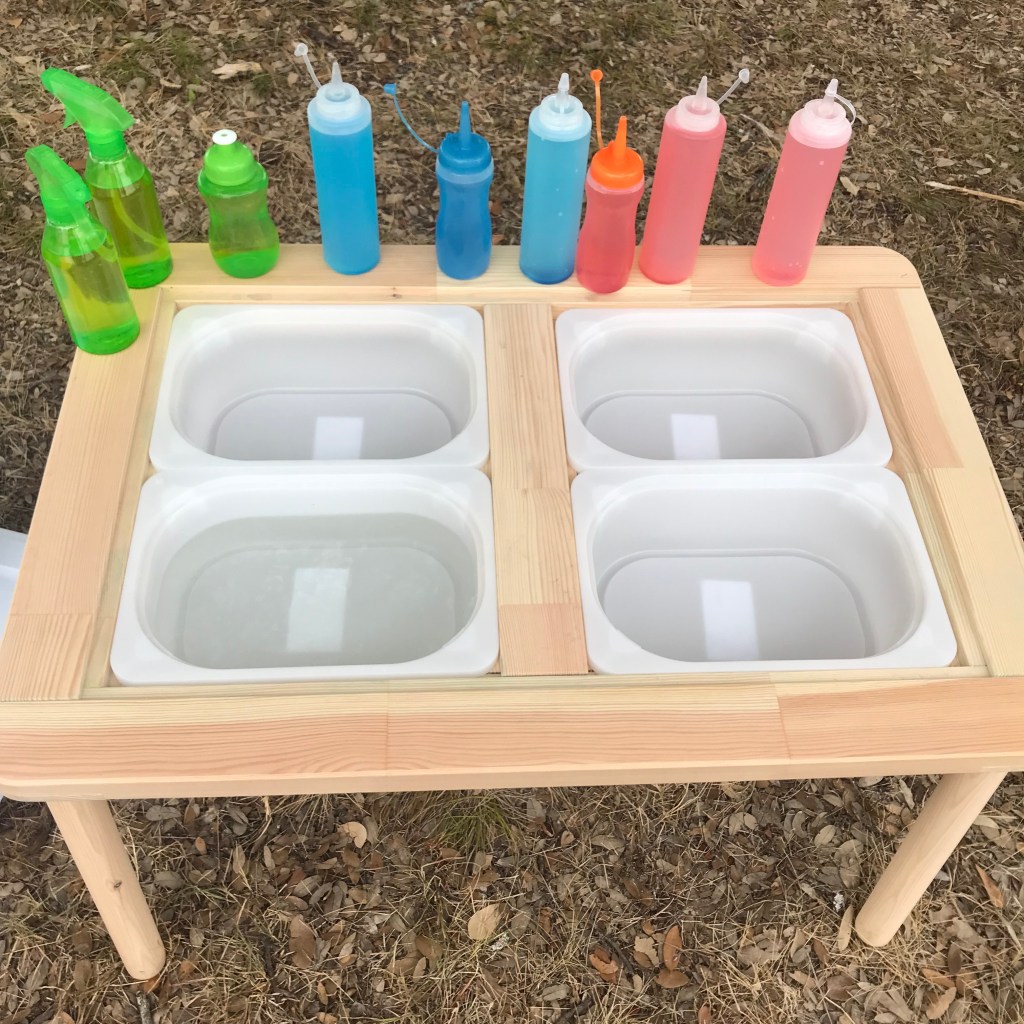
This was a color mixing table I set up for the playgroup I run. The children had the option to play together or independently without any interference from adults.
IMAGINATIVE
I have yet to meet a child void of an imagination! I love nothing more than fostering a sense of imagination through sensory play. Children don’t even know they are learning at the same time!
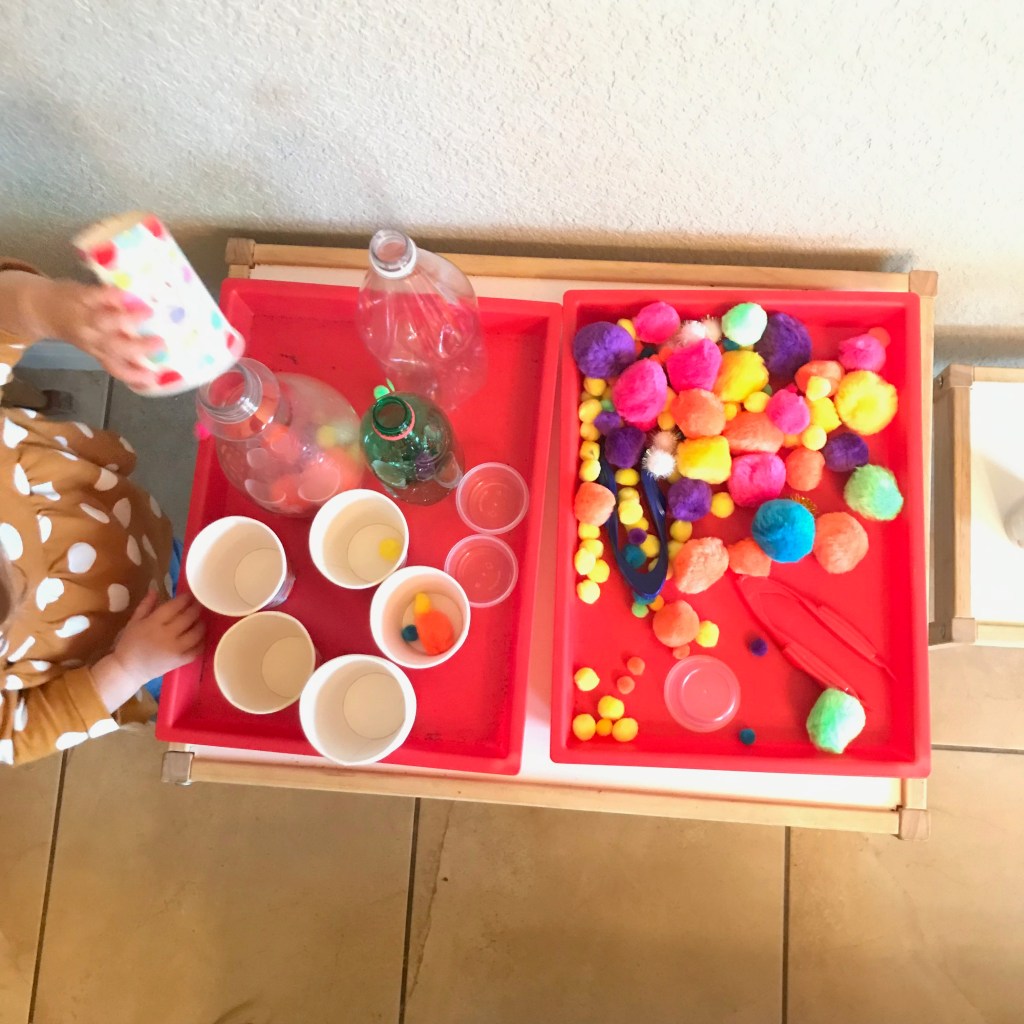
With this set up, the skill I wanted E to work on was pouring and filling. She came up with the idea to serve her “drinks” all on her own!
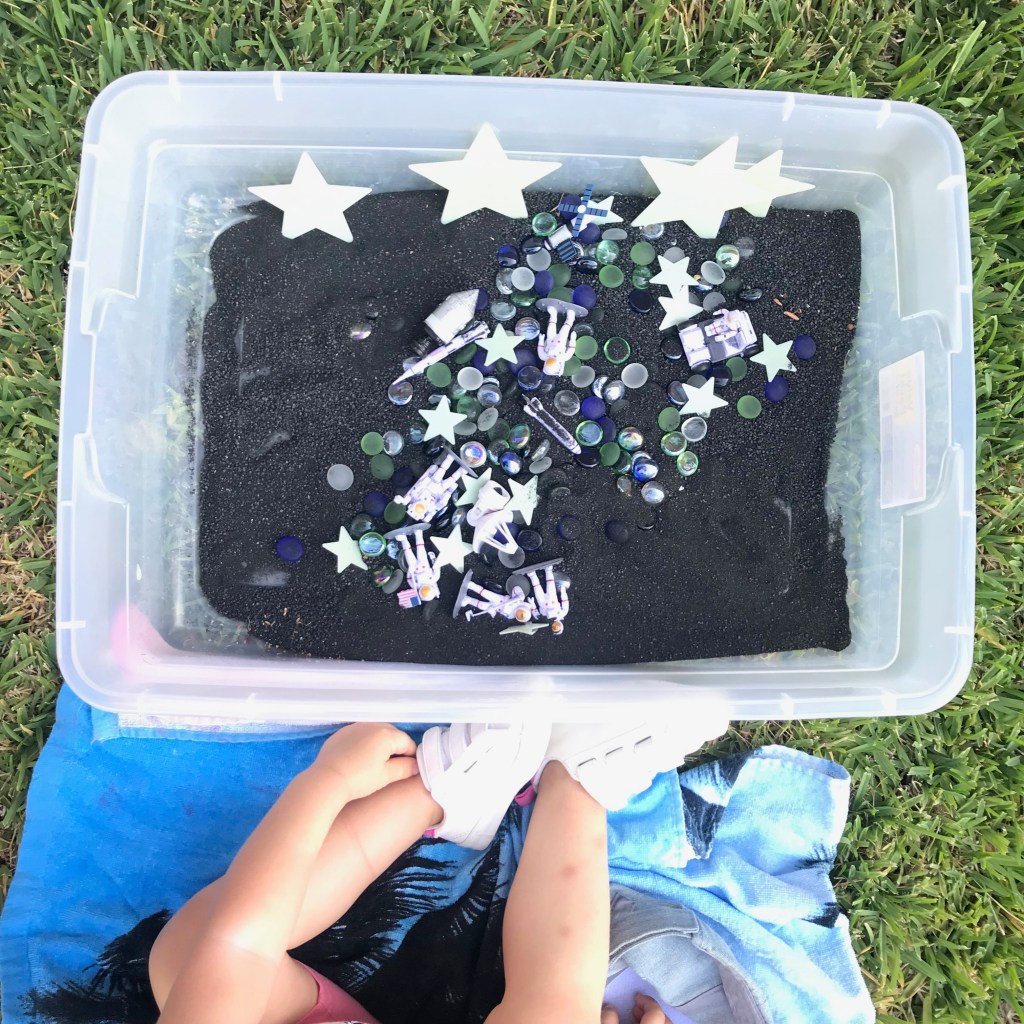
During a space week this bin has always been a hit! Kids are able to act out so many things after we read and talk about space together.
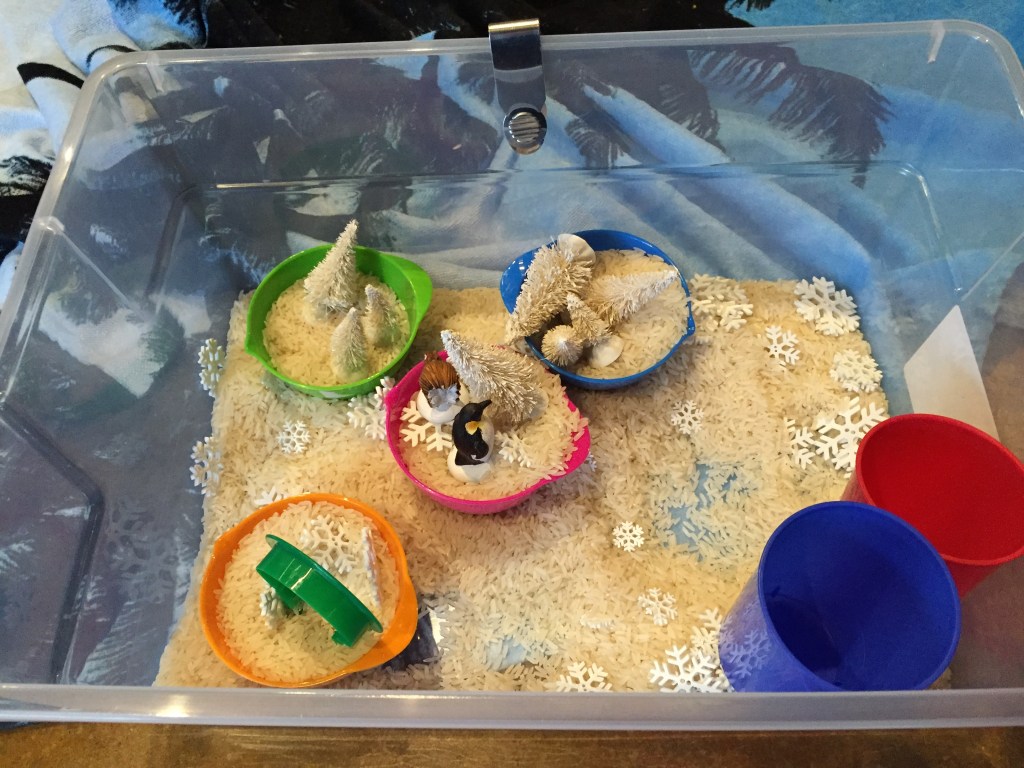
Making a small winter wonderland after reading stories about penguins and arctic animals.

Serving up apples at the farmers market!
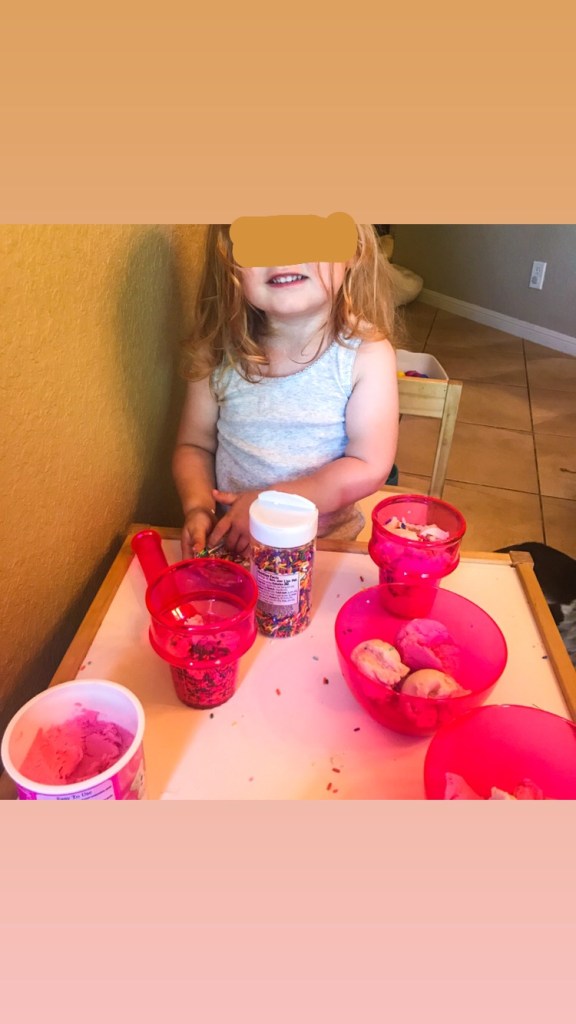
What kind of ice cream would you like?
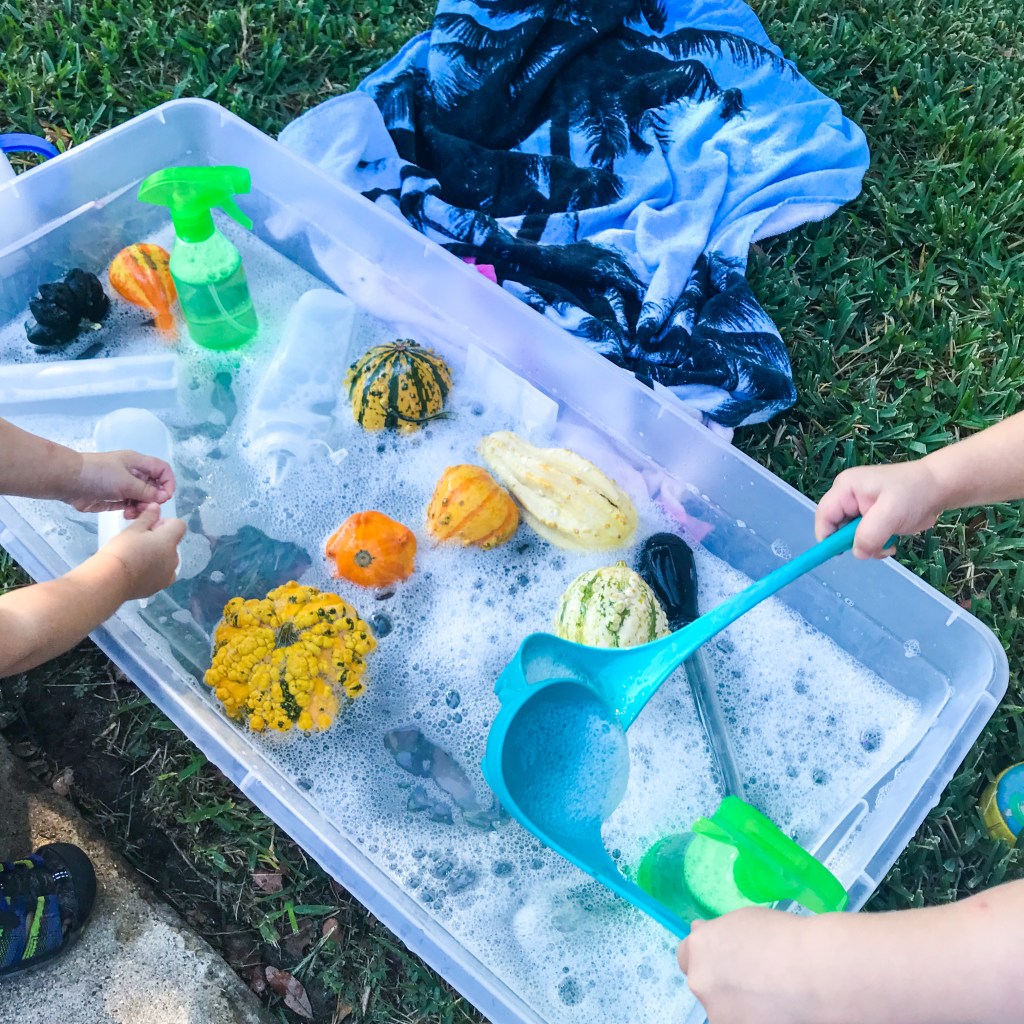
Pumpkin washing!
Now, after all of this you may think that every bin has to have some type of activity connected to it. This is so not true! Sometimes you give your child a bin or a tray just to play!
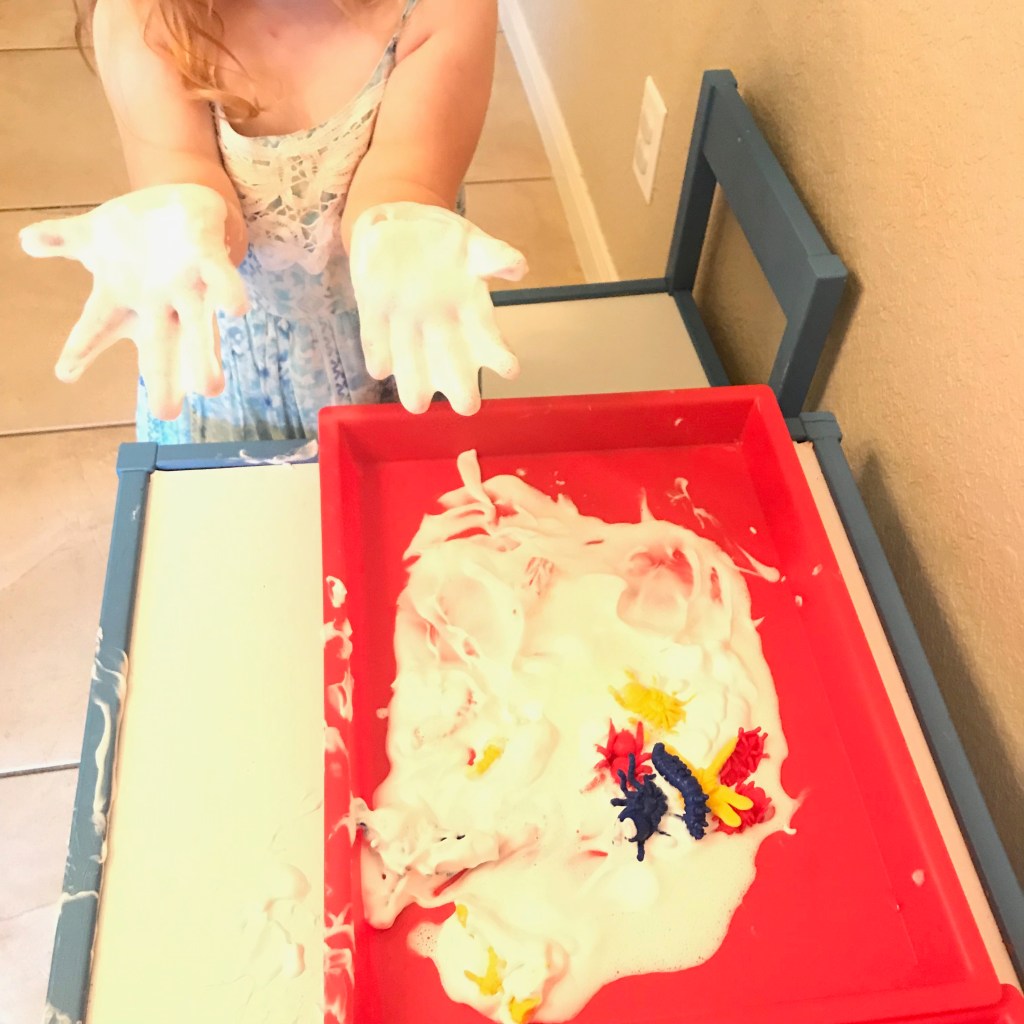
I always always have cans of shaving cream at the ready. I’ll say it again, KIDS LOVE TO BE MESSY!! Embrace it!
I’m also a huge advocate of water play at the sink or in a wash tub!
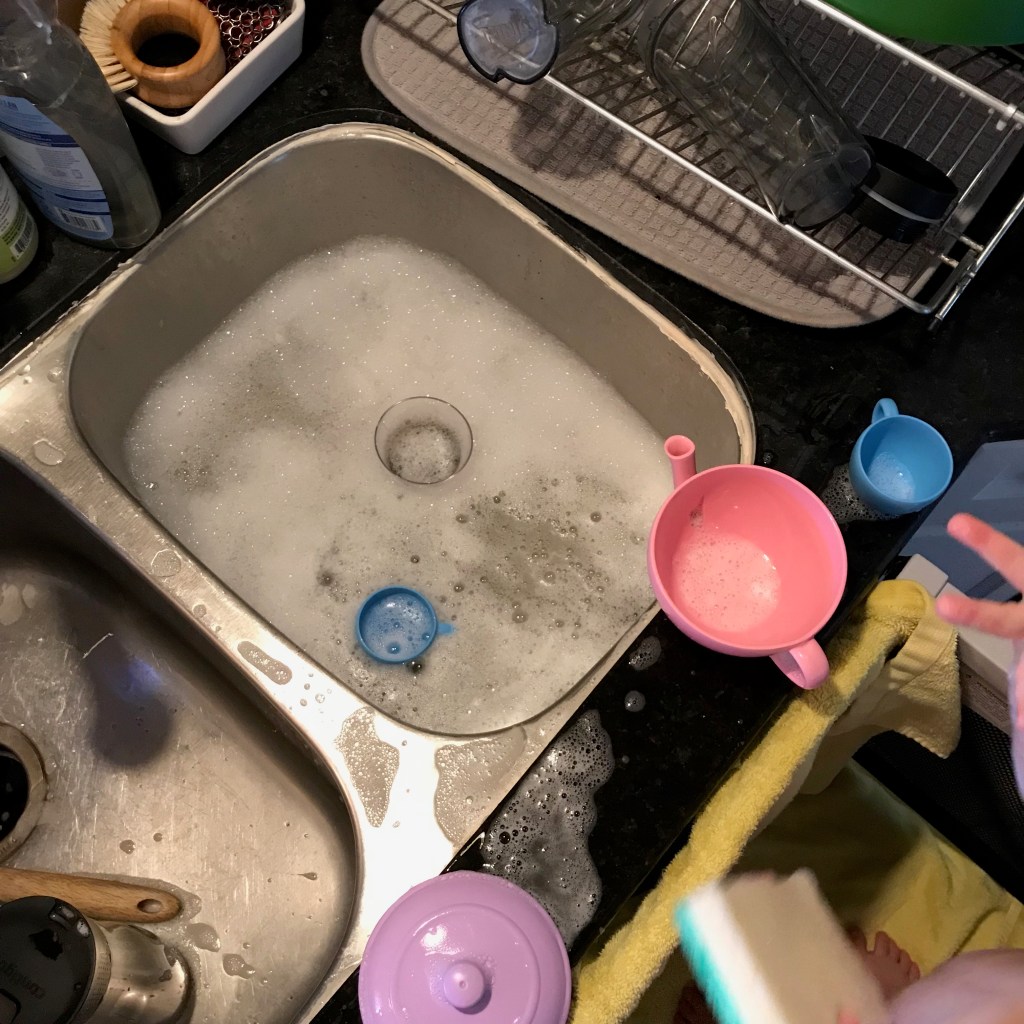
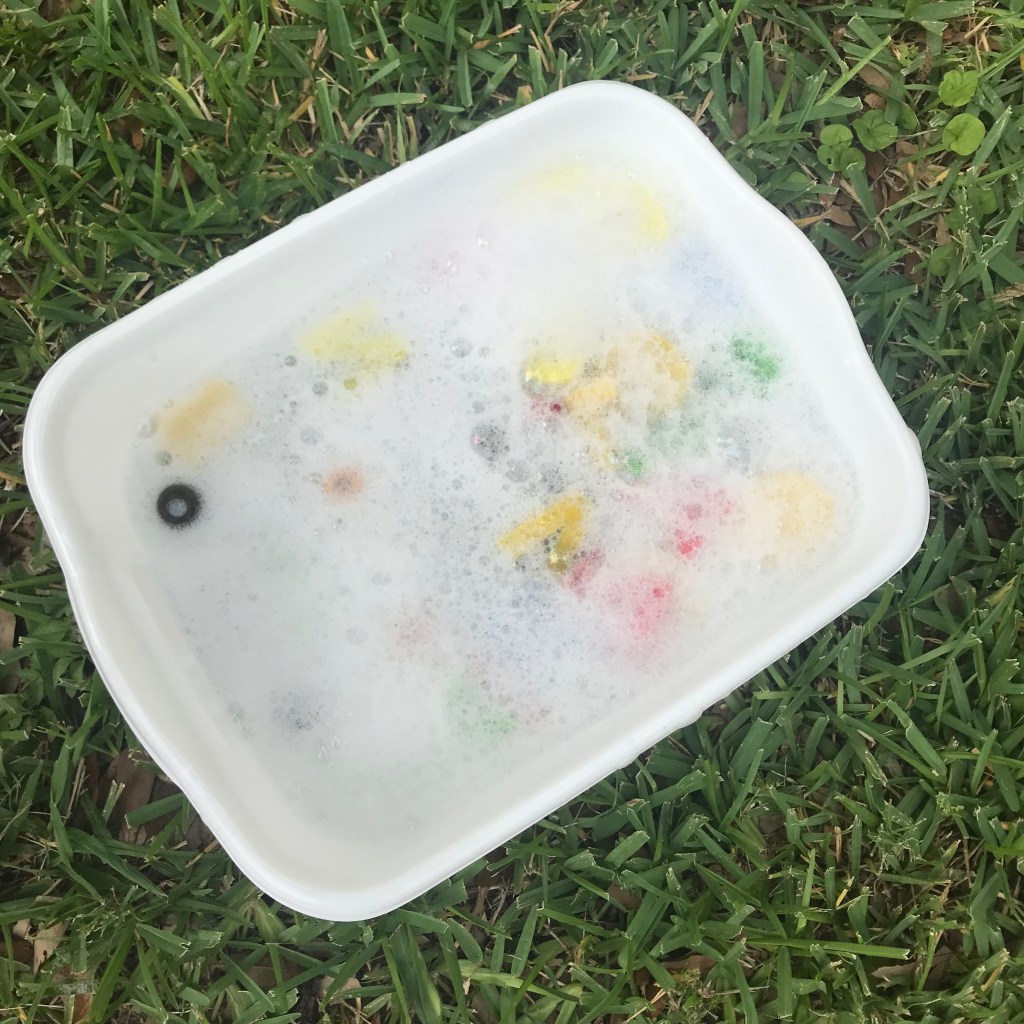
One huge piece of encouragement I can pass on to you is this: You are doing more sensory play than you think! Keep it up, you are doing great!!
I hope this demystified sensory play a little bit for you! As always, connect with me on Instagram @rachrunstx or theteachingnannyblog@gmail.com




 The Teaching Nanny