
*This post contains Amazon Associate links*
Hello! How are you today? Are you feeling some nice cooler fall like weather this week? In Texas, we call this False Fall. The temps may have dropped we know they’ll back up into the 100’s next week! But, I digress. You aren’t here for a weather report. You want to see my Fall Sensory Bin!
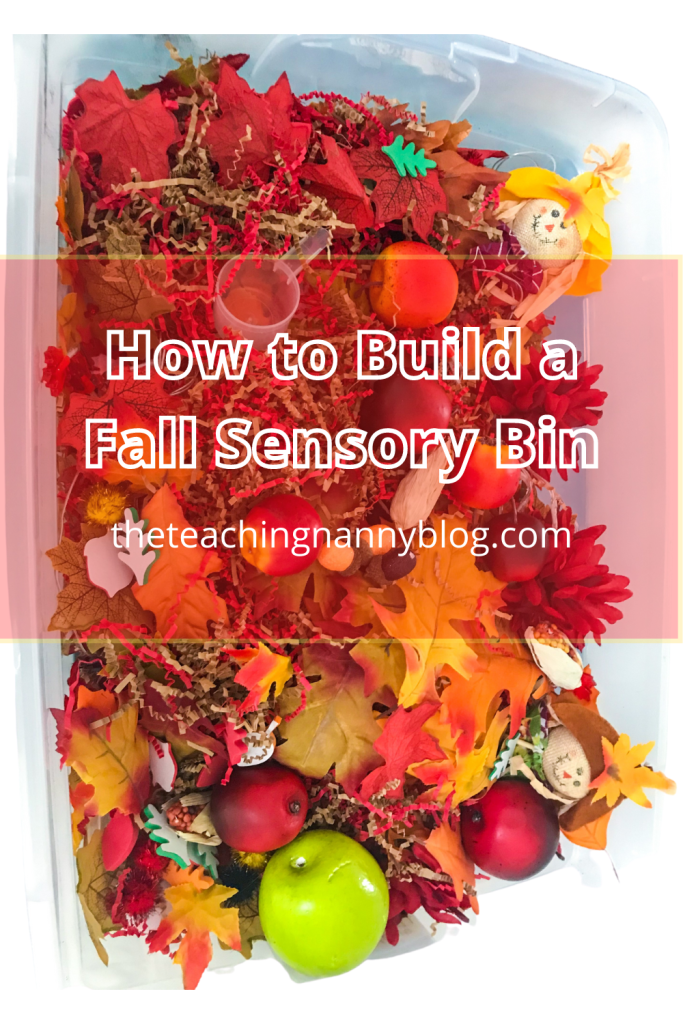
First off, let’s discuss the elements of a great sensory bin. Think of a bin as a cake. You have many ingredients that come together to form a delicious treat!
Most sensory bins have four major elements:
Base
Filler
Fine Motor Element
Tools
To start, you’ll need a container of any size. This is my all time go to size bin. They come in a two pack at Walmart for $7.98!
*Base*
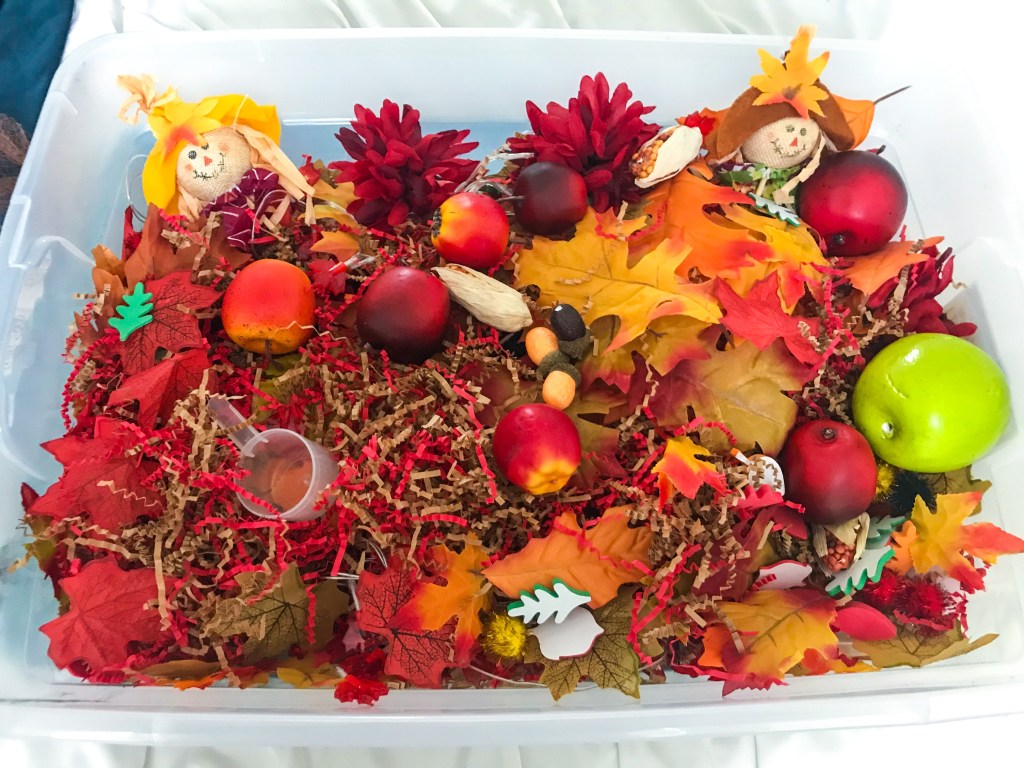
When building out your sensory bin, the base will be your largest element. Think of this as the flour if we’re using the cake analogy! I have a rotation of bases that I keep on hand. Some bases that I have used to great success have been: Beans, Corn, Lentils, Rice, and Pom Poms. For my fall bin, I love using this brown and red crinkle cut paper.
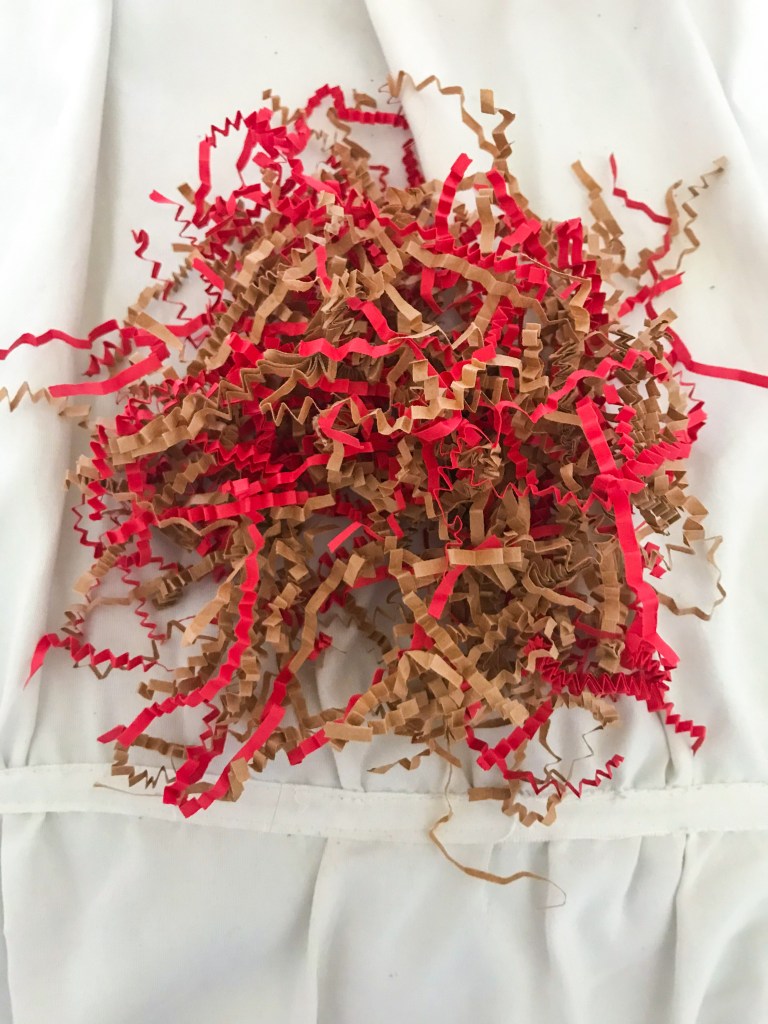
Investing in a few good base layers will give you many options in making all sorts of sensory bins!
*Filler*
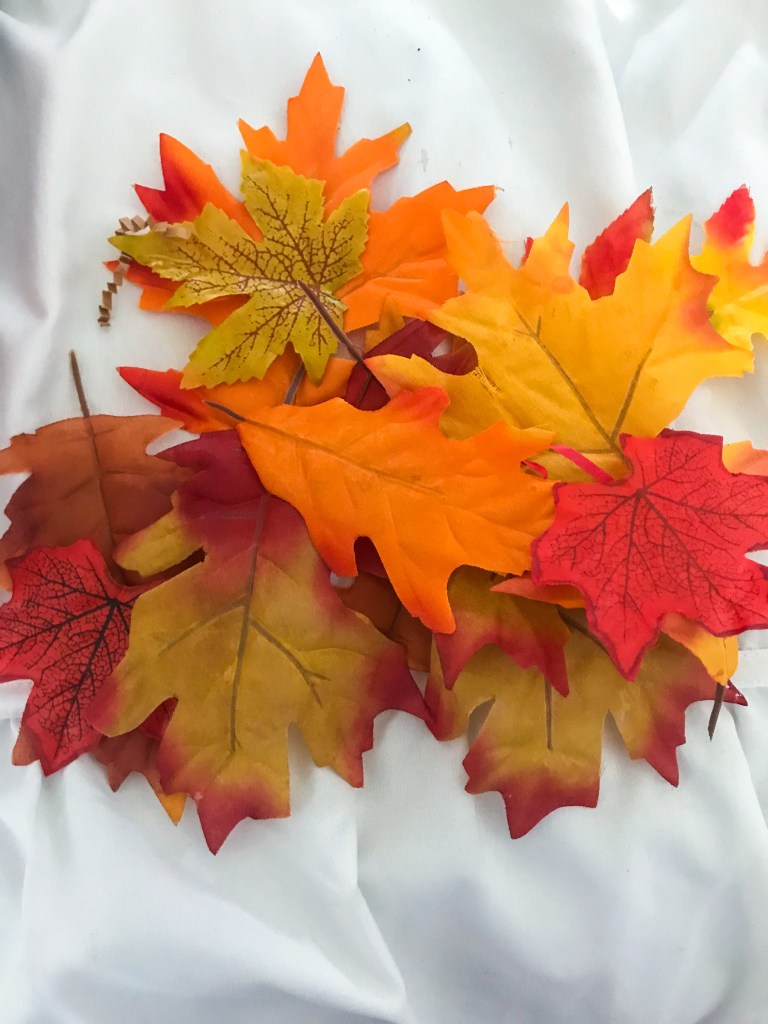
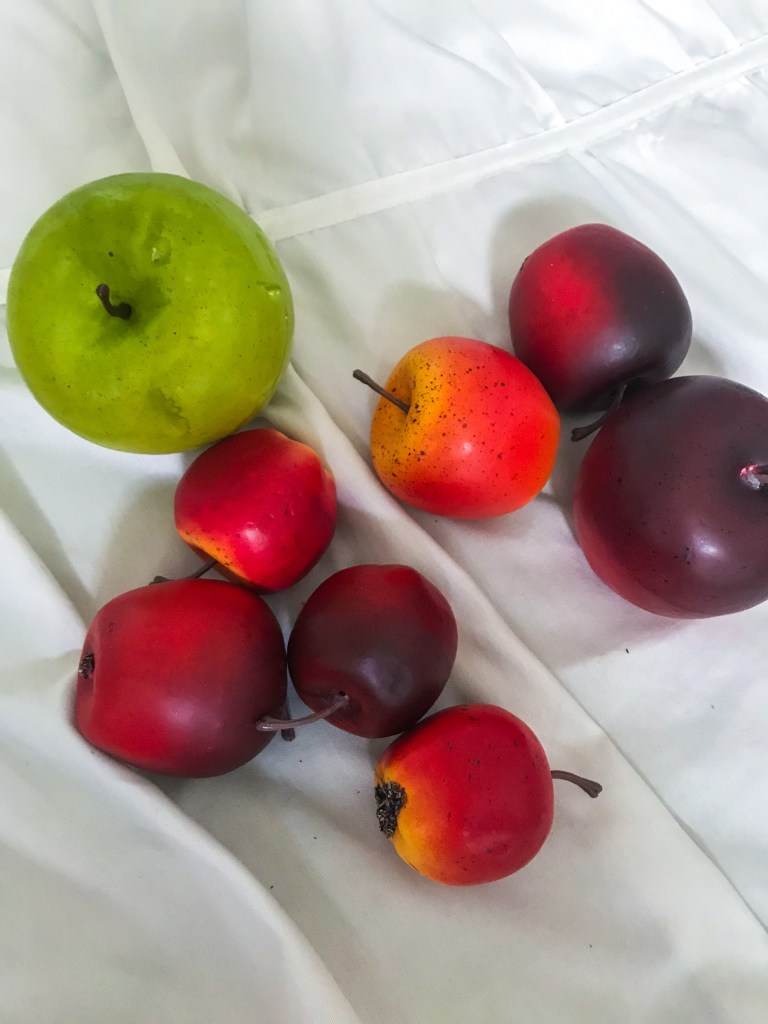
This layer does not need to be as large as your base. It just adds some extra ompf to your bin. I love to make my filler themed, for fall it makes total sense to use fake leaves and apples for this layer! You could use fall leaves as your base layer as well. There are no hard and fast rules here! I found this awesome set of fall goodies. Apples were harder to come by this year, I think I found these super realistic ones at Target!
*Fine Motor Element*
Ok, so I said there were no hard and fast rules, but here is one element that needs to be incorporated in every sensory bin! The purpose of a sensory bin is to engage your child in multiple fine motor skills, like scooping, pouring, grasping, and using a pincer grip. If there is one ingredient you shouldn’t skip, it’s this one! In my fall bin you’ll find stickers (don’t tell your kids they are stickers, they’ll never know!), mini acorns, pom poms, and mini corn cobs. This element is where the teaching comes into play.
Ways to use these elements:
*Pattern Making
*Counting
*Color Recognition
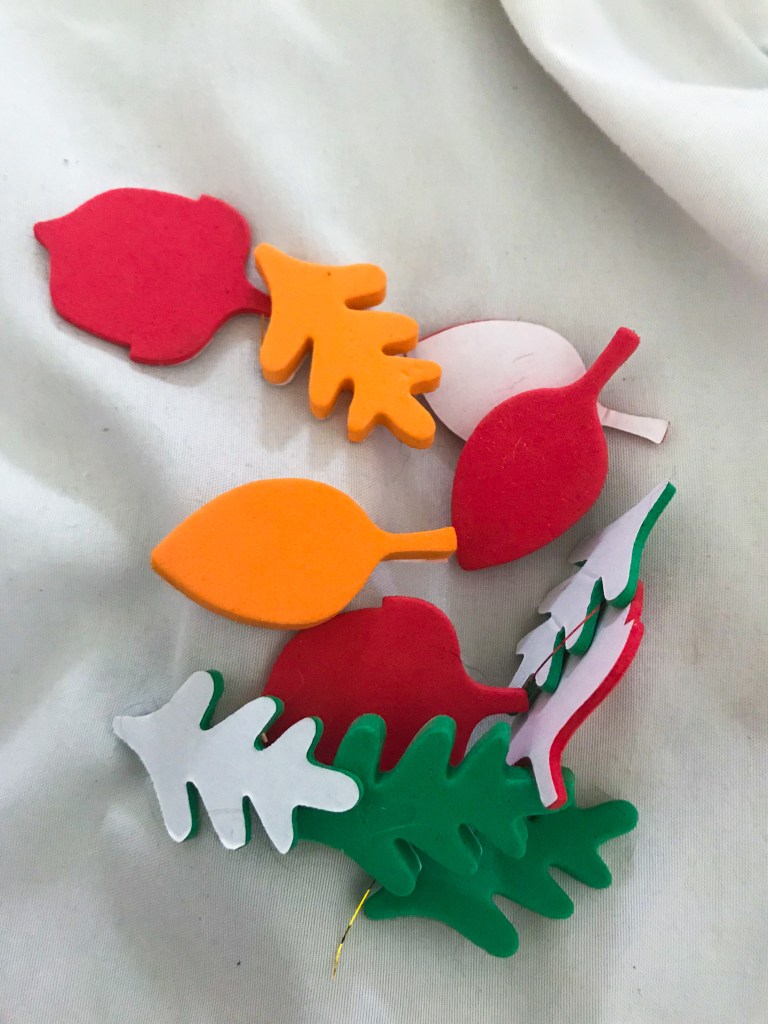
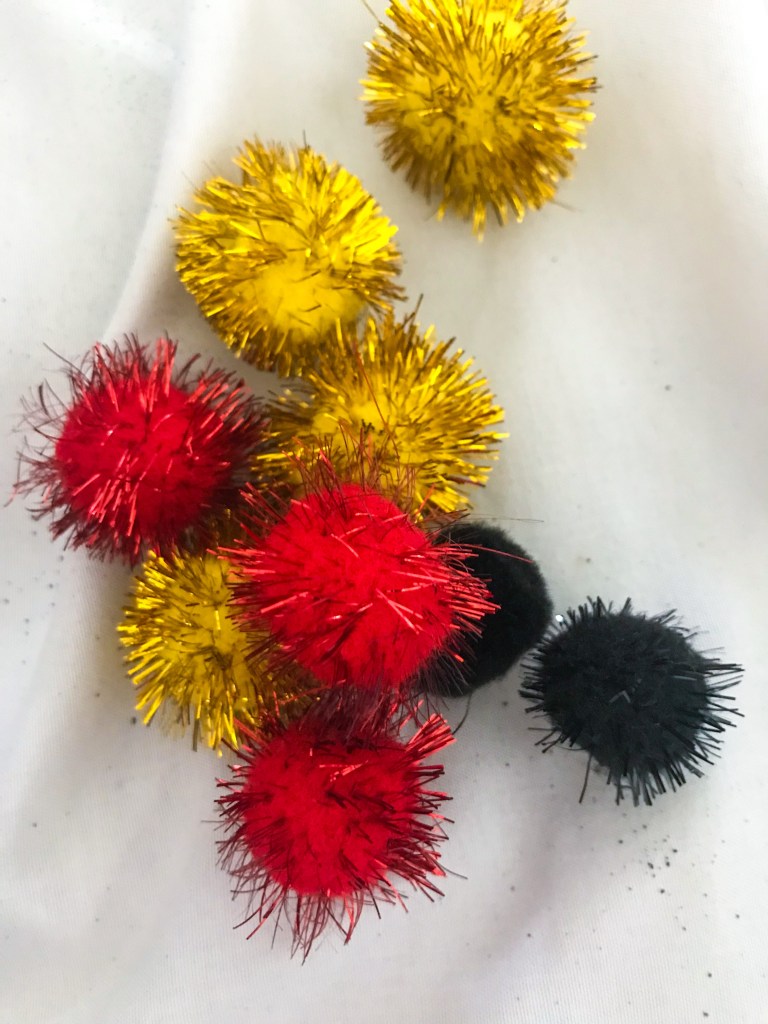
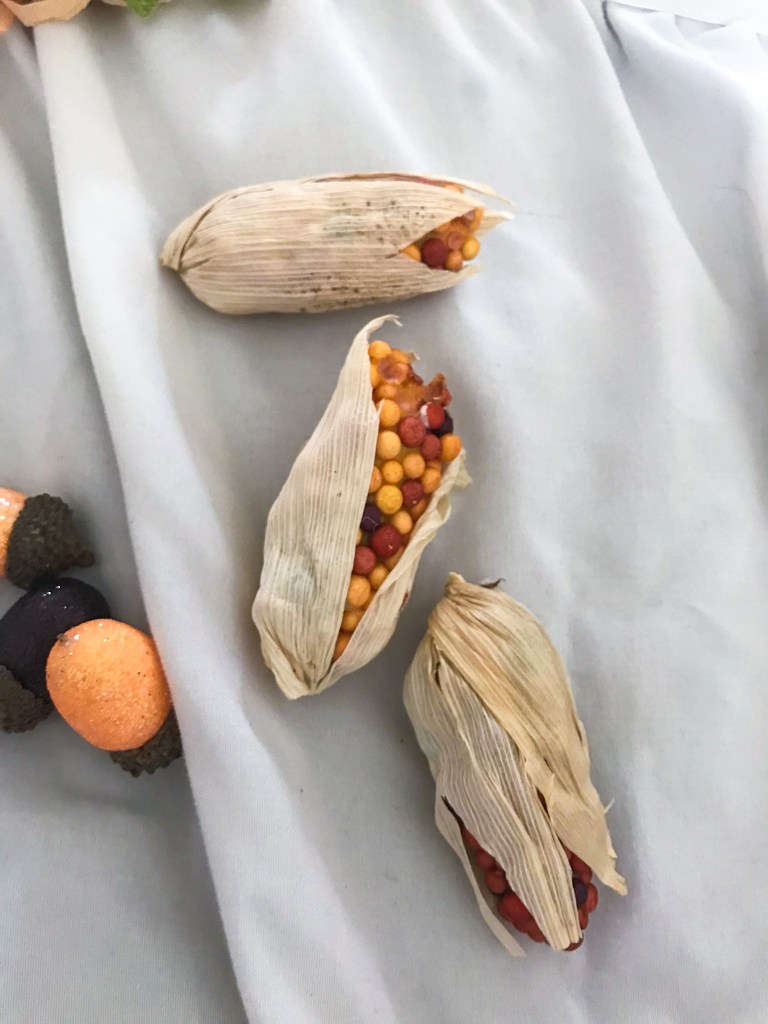
*Tools*
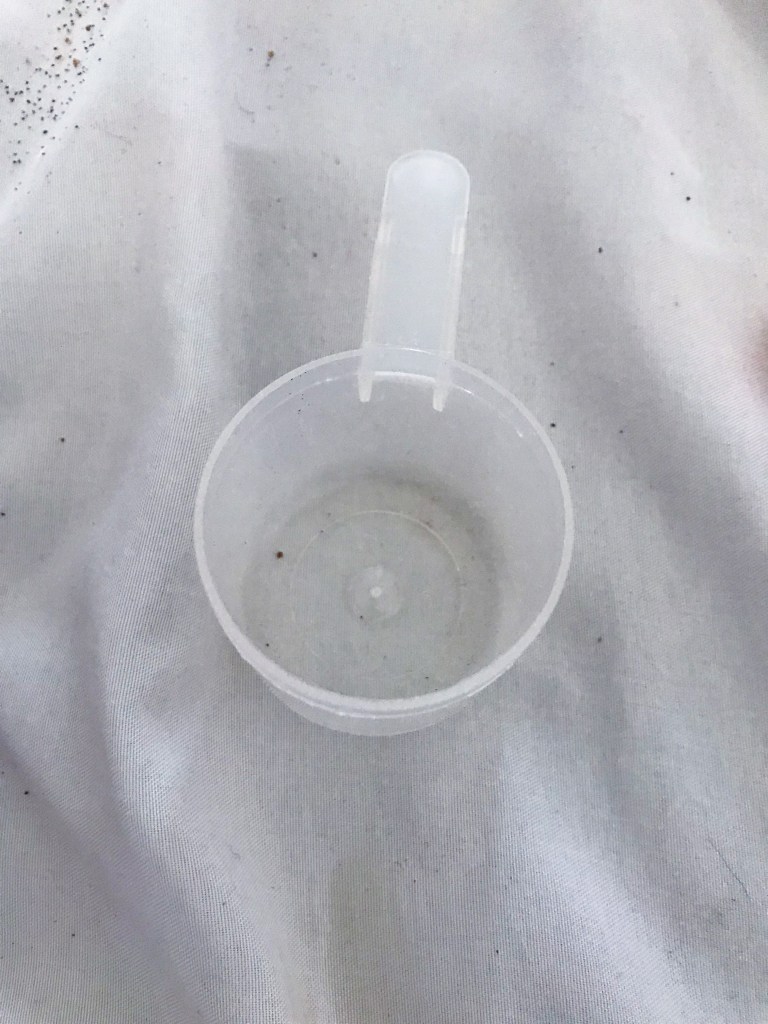
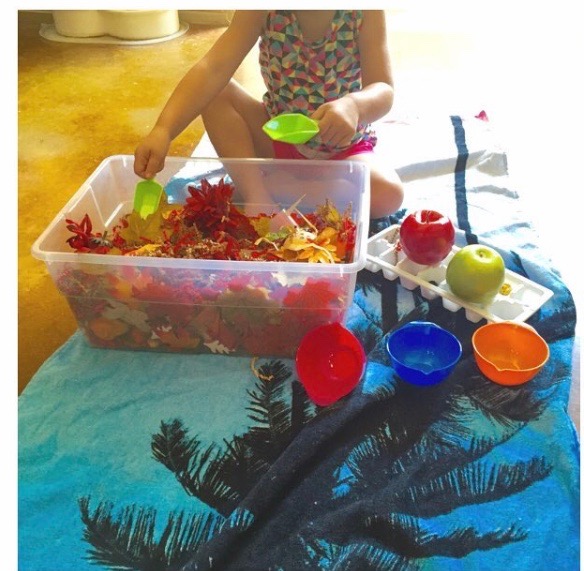
After the fine motor element, tools are the next important item in a sensory bin. I love using items from around the house, like this small scoop from a protein shake mix! This set, while a little expensive will last for years. You’ll use it for every sensory bin!
Utilize your kitchen! Look small spoons, ice cream scoops, mini tongs, and mini bowls in the entertaining section at The Dollar Tree. You don’t need to be super fancy, just look for tools that will fit your child’s smaller hands.
Now that you added all your ingredients to your sensory bin cake, its time to bake! Hand it over to your child and let his or her imagination run wild!
Come back tomorrow where I will share how to transition this Fall Sensory Bin for October and November along with a few sensory bin activities!





4 Comments